Automated image analysis
- Automatic heart reconstruction
- AI powered clinical and morphological measurements
Company
About us Media Hub FAQ ContactProducts
Virtest Applications CORAAL-LAAO CORAAL-TAVI Loading… Evidence Careers
We built CORAAL, a tool that turns AI, physics and clinical data into decisions you can trust.
CORAAL is not yet CE marked and is not available for clinical use.
Transforming patient-specific data into real insight.
powered by


 LAAO
CORAAL is not yet CE marked and is not available for clinical use.
 TAVI
Anticipate how the valve will expand in each aortic root, and where leaks or conduction issues could appear.
CORAAL is not yet CE marked and is not available for clinical use.
Optimize your pre-op workflow today. Simulate multiple strategies with CORAAL before the procedure begins.

Book a demo and we’ll walk you through a real planning workflow with CORAAL.
Virtest presents CORAAL, an ecosystem of web-based tools for patient-specific computational modelling of complex structural heart interventions.
CORAAL is not yet CE marked and is not available for clinical use.
The same four-step workflow runs across every CORAAL application, from the first scan to the report you share with your team.
Medical images are turned into patient-specific 3D digital models of the left atrium and the left atrial appendage.
Receive recommendations on device size and positioning, review the options and virtually implant the device of your choice. The final decision remains yours.
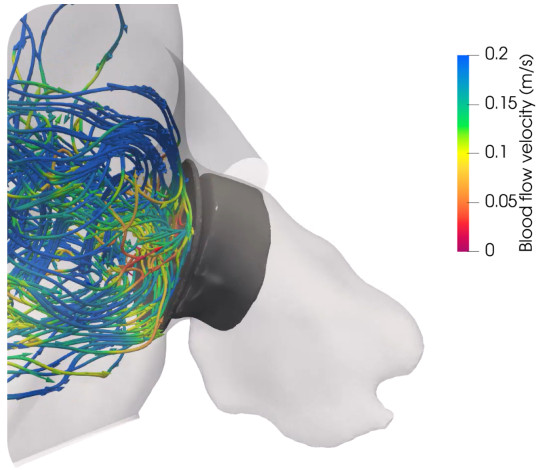
Simulate blood flow after device implantation to assess hemodynamic changes and investigate potential flow-related complications.
Generate and share interactive reports with colleagues to review the implantation, with insights about possible post-procedural complications.
One platform, one workflow. Each CORAAL application brings patient-specific simulation to a different structural heart intervention.
01 LAAO
Advancing LAAC with intelligent procedural guidance. From automated anatomical measurements to patient-specific flow simulations and interactive clinical reports.
02TAVIDecoding aortic anatomy for personalised valve selection. From calcification risk assessment to virtual deployment of balloon-expandable and self-expanding valves.
 03Next
A new patient-specific simulation application is currently being built by our team. More details will be announced soon.
LAAOAdvancing LAAC with intelligent procedural guidance.
Advancing LAAC with intelligent procedural guidance.
CORAAL creates patient-specific digital models of the left atrium to simulate occluder implantation and help anticipate potential pre- and post-procedural complications. From automated anatomical measurements to flow simulations and interactive clinical reports, CORAAL-LAAO supports physicians throughout the LAAC workflow.
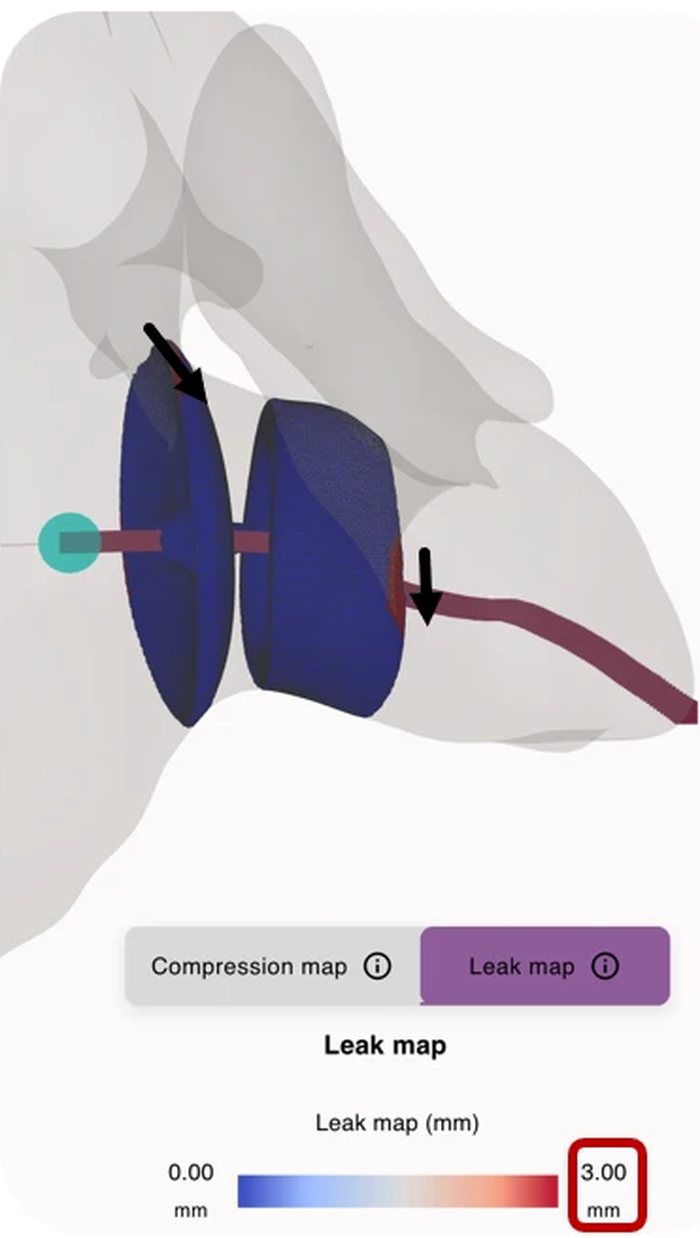
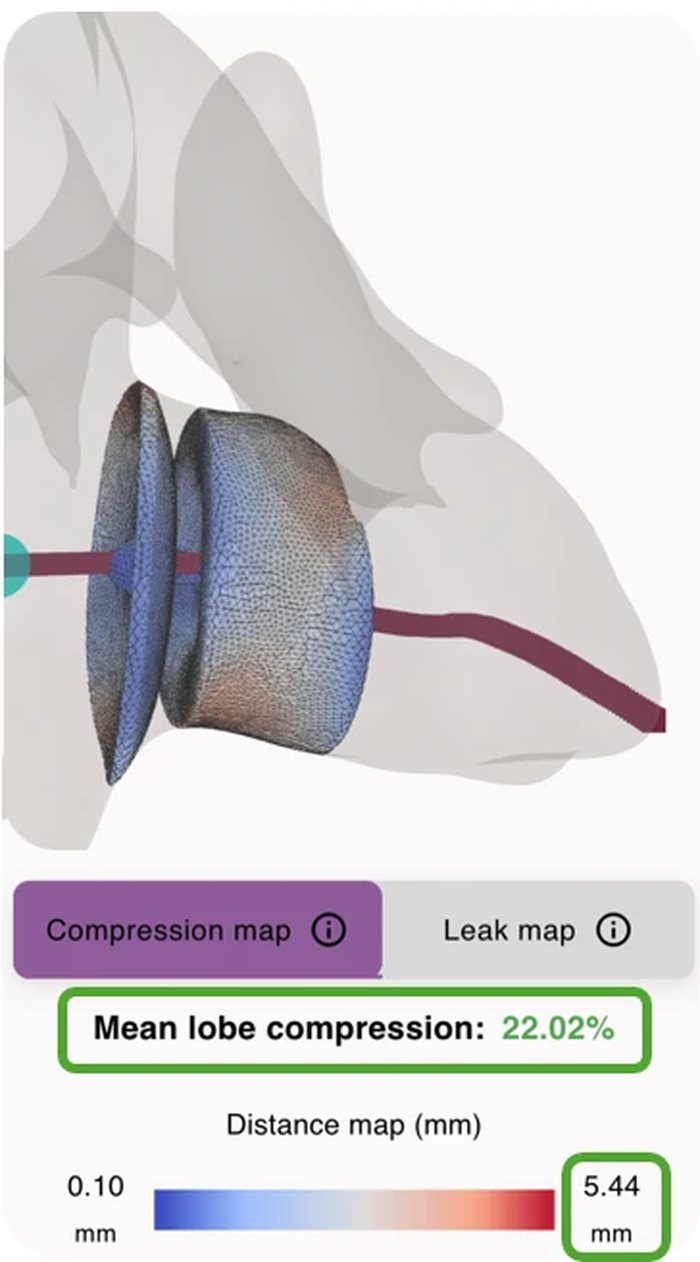
Three complementary views of the same virtual implantation, ready to review with your team before the procedure.
 TAVI
Decoding aortic anatomy for personalised valve selection.
CORAAL-TAVI demo available from January 2027
Decoding aortic anatomy for personalised valve selection.
From calcium and anatomy to the optimal valve and deployment height. Evaluate the aortic root calcification pattern, simulate balloon-expandable or self-expanding prosthesis deployment, and predict paravalvular leakage before the procedure.
CORAAL-TAVI demo available from January 2027
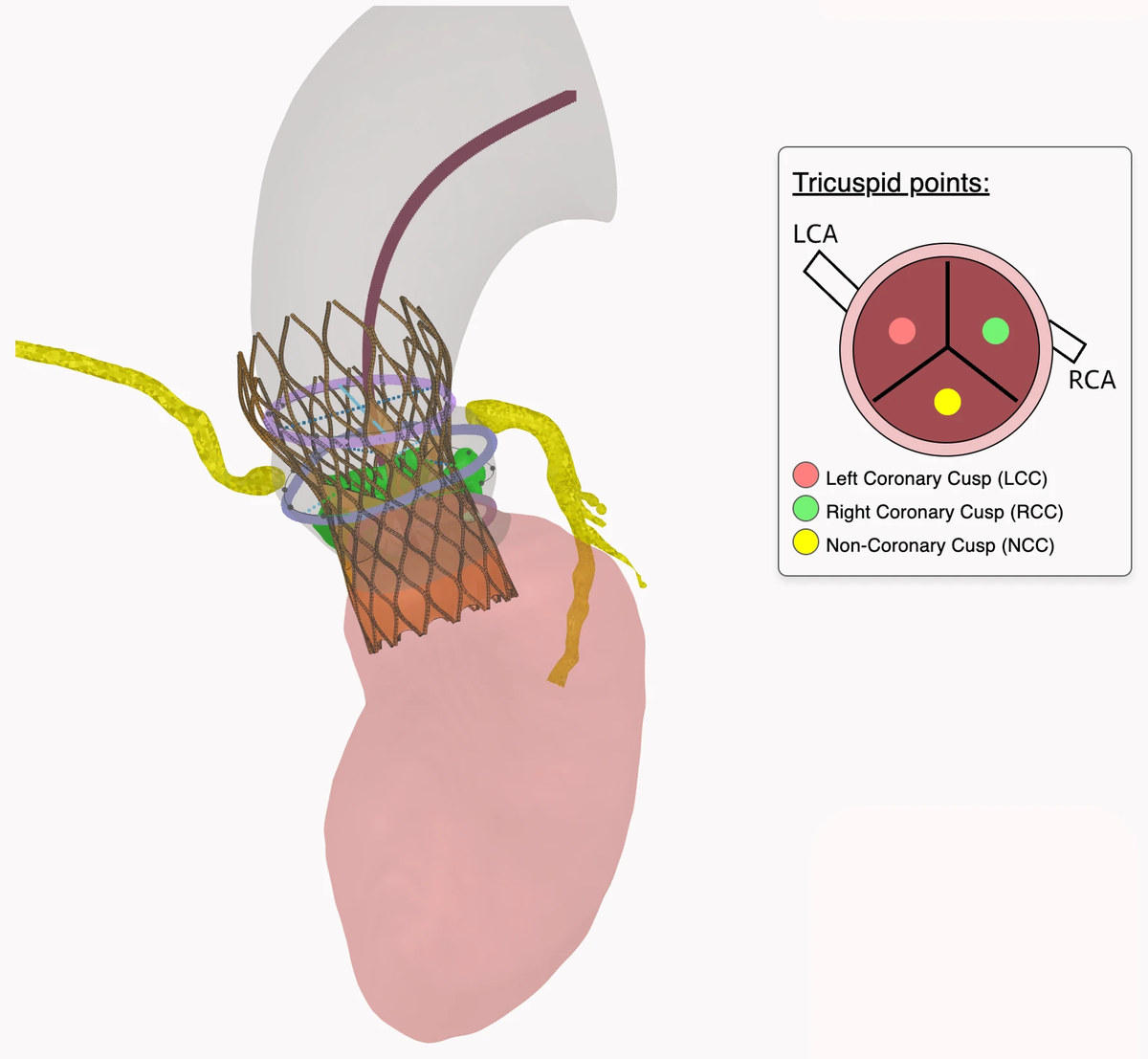
Key aortic anatomy and calcification patterns are quantified to recommend the best type of valve for each patient.
Suggest new approaches and simulate the new setting to see how the frame deforms.
Visualise blood flow with your chosen valve to assess the risk of leaks and HALT.
More than 300 patients simulated with hospitals across Europe, and the peer-reviewed work behind every result.
“Optimal placement is what makes the difference in the haemodynamic pattern after LAA occluder implantation. A favourable pattern is probably even more important than powerful antithrombotic treatment in avoiding events such as DRT. A software that shows you where to get the most favourable haemodynamics is something we have strongly missed.”
“After proctoring over 200 LAAO implanters and nearly 1,000 LAAO implants, I am convinced that a pre-planning tool like Virtest improves the quality of closure, reduces procedural complications and improves procedural efficiency. As more implanters move toward a single operator, ICE-only workflow, pre-procedure planning becomes even more important. Virtest’s ability to simulate different potential closure solutions makes it highly valuable, especially in the most complex LAAO anatomy. If I were a patient undergoing an LAAO implant, I would insist that my implanter utilize this tool to achieve the best possible solution for me.”
“We operate on three-dimensional anatomy, but we still plan on two-dimensional slices and a lot of intuition. CORAAL lets me rehearse the case before the patient is on the table: change the device, change the position, and see how it fits, in seconds.”
Cepas-Guillén P, Albors C, Mill J, et al.
Multicentre study in 285 patients across 10 hospitals. Patient-specific CFD simulations identified the haemodynamic mechanisms associated with device-related thrombosis, and a CFD-based risk score predicted DRT better than implantation depth alone (AUC 0.81 vs 0.71).
Segarra-Queralt M, Mollà M, Barrouhou M, Olivares AL, Albors C, et al.
A patient with recurrent device-related thrombosis after LAAO, studied by combining haemodynamics with mechanistic models of thrombus formation and the effect of apixaban, to explain how device position and anticoagulation shaped what happened after the procedure.
Singh M, Mendez K, Ayers B, Wang SX, Takahashi A, Teodorescu DL, Mill J, Albors C, et al.
Albors C, Terreros NA, Saiz-Vivó M, Zappala P, Terpstra MM, Olivares AL, et al.
Albors C, Mill J, Olivares AL, Iriart X, Cochet H, Camara O.
Mill J, Harrison J, Saiz-Vivó M, Albors C, Morales X, Olivares AL, Iriart X, et al.
Albors C, Olivares AL, Iriart X, Cochet H, Mill J, Camara O.
Pons MI, Mill J, Fernandez-Quilez Á, Olivares AL, Silva E, et al.
Mill J, Agudelo V, Olivares AL, Pons MI, Silva E, Nuñez-Garcia M, et al.
Mill J, Olivares AL, Arzamendi D, Agudelo V, Regueiro A, Camara O, et al.
Schedule a demonstration with our clinical solutions specialist and go through a patient-specific simulation step by step.
CORAAL is not yet CE marked and is not available for clinical use.
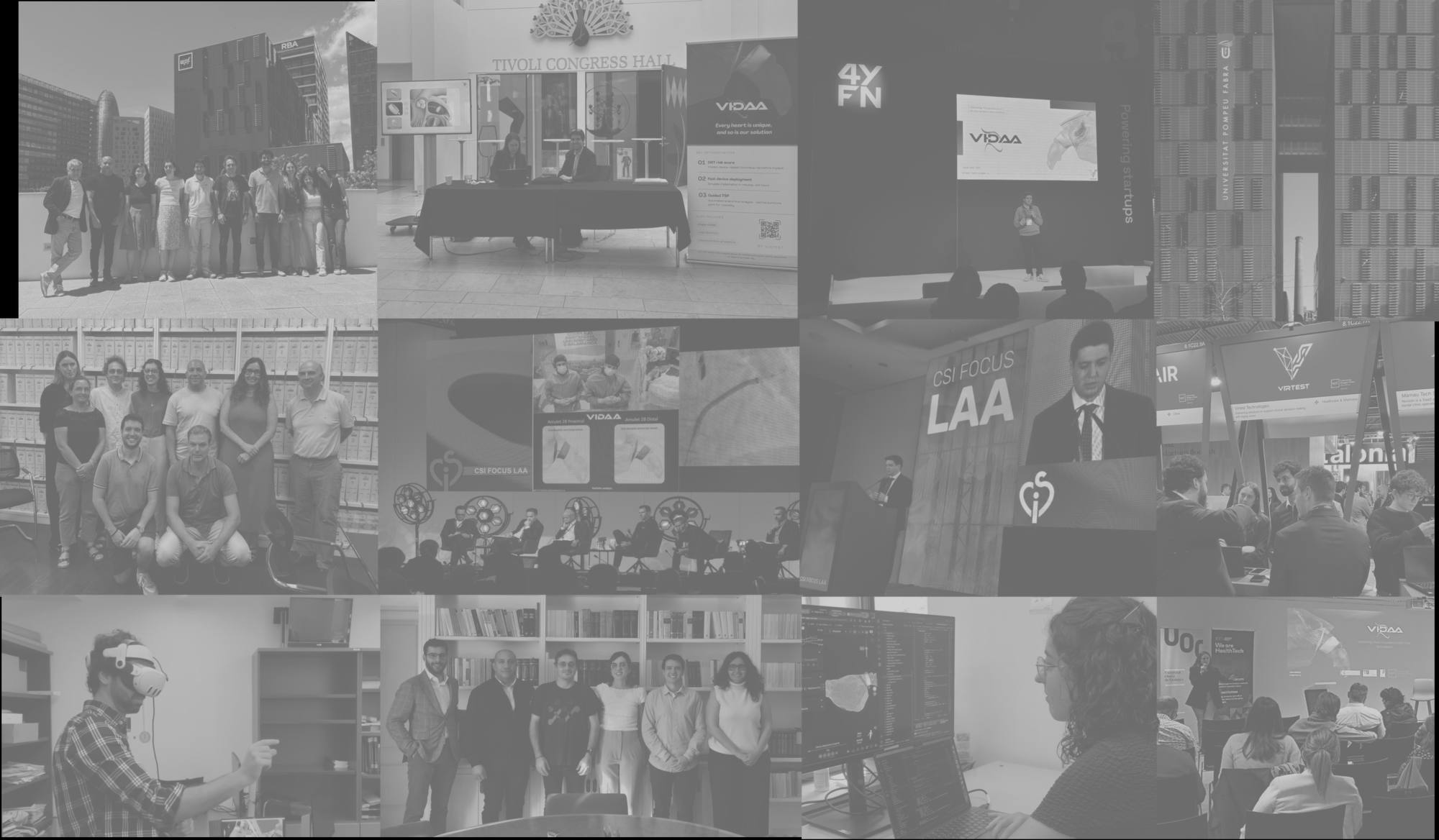
Virtest is a spin-off of the Physense group at Universitat Pompeu Fabra, Barcelona, developing its technology hand in hand with clinical teams.
No two hearts are alike. Like fingerprints.
In 2016, Dr. Xavier Freixa and Dr. Dabit Arzamendi brought us a question they faced every day: “Why do some patients with atrial fibrillation develop thrombi, and others don’t?”
Most of those thrombi form in the same place: the left atrial appendage. Closing it can protect these patients, but no two appendages are the same, and neither is the right way to close them.
They didn’t have an answer. Neither did we. But we couldn’t stop thinking about it.
Andy and Oscar started searching at the PhySense research group at Universitat Pompeu Fabra. A couple of years later, Jordi joined as a PhD student and Ainhoa as a software engineer. The four of us would go on to found Virtest. Back then, we were just a small research team with a question that had become ours too.
Then came our first lesson. We proudly brought Dr. Freixa our first result. It had taken a week. He looked at it and told us to come back when we had something he could actually use. He was right, and it shaped how we work to this day: no tool matters if it doesn’t fit the moment a heart team makes its decision.
So we started listening more than explaining, something we still do today. We built what clinicians needed, kept what helped, and changed what didn’t. The feedback was encouraging, and more and more cardiologists began asking us the same thing: can I use this with my patients?
We couldn’t say yes. It was still a research tool. But we didn’t want something we had built with them to end up in a drawer.
That’s when Carlos and Mònica joined us, before Virtest even existed, simply because they believed in it. Together, we built a great team, and took the step.
Today, we have simulated hundreds of patients with hospitals across Europe. We started with the left atrial appendage, but our goal is every structural heart intervention. And we are on our way to something that once sounded crazy: being there for every heart team, before it happens.
The Virtest Team

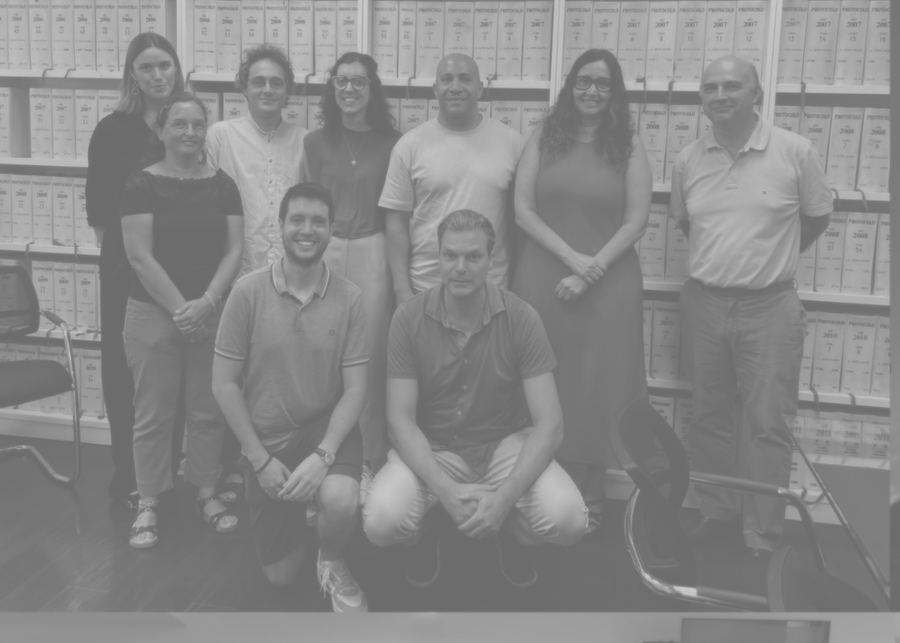
Helping heart teams and companies understand each patient’s heart, and decide with more knowledge and confidence before they intervene.
To help heart teams anticipate not only the intervention, but what comes after it, with tools built alongside clinicians and designed to fit the way they make decisions.
Virtual testing as a natural step before every structural heart intervention, so every decision starts from the patient’s own heart.
Taking what we started with the left atrial appendage to more structural heart procedures, and growing our tools as clinical practice evolves, always together with the heart teams who use them.
What guides us comes from where we started: engineers and clinicians working side by side, on real questions, for real patients.
Exploring what could happen, during the intervention and after it, so every team is better prepared.
Precise in what we do, honest in what we say. We never claim more than we can show.
Engineers and clinicians, side by side. Listening more than explaining, as we have since day one.
Technology that supports medical judgement, never replaces it. Because behind every case there is a patient.
Engineers, scientists and regulatory experts who learned early to listen to clinicians, and still do. Together with the cardiologists who have been with us since day one.
We are always interested in people working in biomechanical engineering, medical image processing, computational fluid dynamics and software development who want to change how cardiovascular medicine is planned.
See a real planning workflow with CORAAL, from CT scan to confident decision.
CORAAL is not yet CE marked and is not available for clinical use.
Get in touch if you would like to work with us, explore a clinical collaboration, discuss our technology, or request a demonstration.
Experience how Virtest's CORAAL-LAAO platform transforms DICOM image files into virtual left atrial replicas, detailed flow vectors, and real insight reports.
Talk to us, or see CORAAL in action.
CORAAL is not yet CE marked and is not available for clinical use.
Virtest was one of eight startups selected out of 27 applications to present at the final session, held at Vapor Gran in Terrassa.
Virtest took part in the final session of the Open Innovation Day Health & Care 2026, held on 17 November at Vapor Gran, in Terrassa. Eight projects were selected out of 27 applications to present their work to companies and organisations in the health and care sector.
Andy L. Olivares, co-founder, presented CORAAL, a simulation tool for planning minimally invasive cardiac interventions, along with where the company stands today and the lines of work ahead.
Terrassa is also where Virtest opened its first office, in 2024, so taking part in this programme had a particular meaning for the team.
The programme is driven by Terrassa City Council, through Terrassa Innovació, with the support of the Diputació de Barcelona and in collaboration with Cecot.
CORAAL (formerly VIDAA) is not yet CE marked and is not available for clinical use.
CORAAL is one of nine initiatives chosen out of 38 submitted to the programme that prepares health innovations for adoption by the Catalan health system.
CORAAL has been selected as one of nine initiatives, out of 38 submitted, in the second call of INNOPASS, the programme driven by the Departament de Salut and Biocat within the Programme for Access of Innovation to the Health System of Catalonia (PASS), with the participation of CatSalut, AQuAS, the Fundació TIC Salut Social and the Institut de Diagnòstic per la Imatge.
The Innovation Passport provides a year of tailored support on clinical evidence, fit within care pathways, technological integration and routes to implementation.
CORAAL (formerly VIDAA) is not yet CE marked and is not available for clinical use.
The multicentre study analysed 285 patients across 10 hospitals to assess how implantation depth and flow dynamics relate to device-related thrombosis.
The IDEAL study has been published in EuroIntervention. In a multicentre study of 285 patients across 10 hospitals, patient-specific CFD simulations identified the haemodynamic mechanisms associated with device-related thrombosis (DRT). A CFD-based risk score predicted DRT better than implantation depth alone (AUC 0.81 vs 0.71). Cepas-Guillén P, Albors C, Mill J, et al. Impact of device implantation depth on blood flow dynamics after left atrial appendage closure. EuroIntervention. 2026;22(8):e444–e454.
Read the paper ↗Jordi Mill presented the new preprocedural planning modules, and a live case planned with our platform was broadcast from the University Hospital of Salamanca.
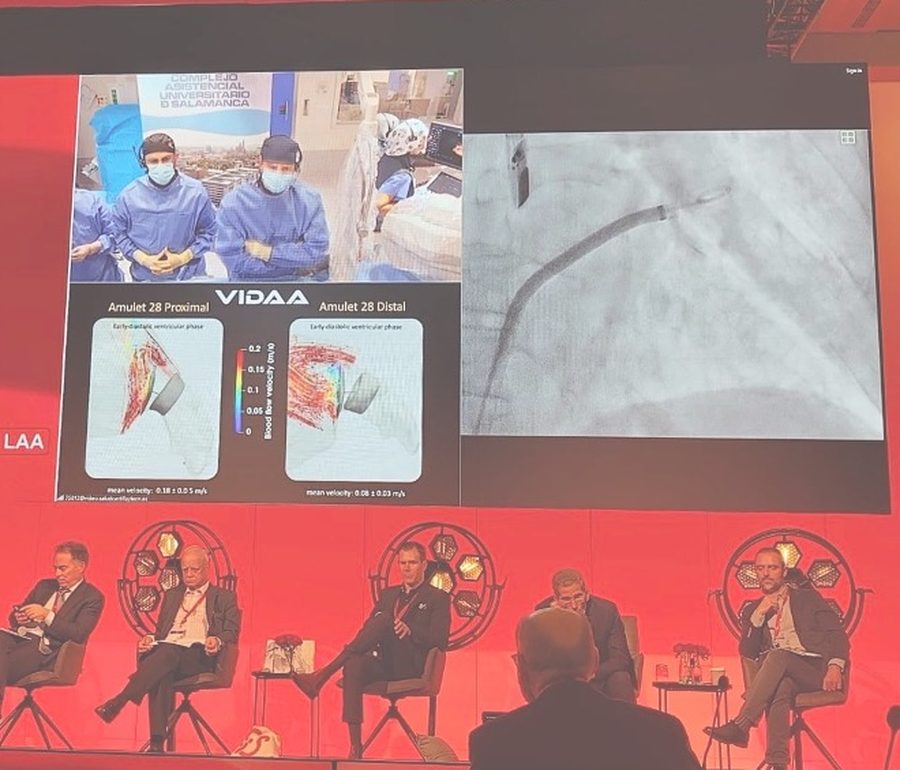
We were honoured to participate once again in the CSI Focus LAA sessions, held on December 5th and 6th, 2025. During the event, Jordi Mill presented on “New Preprocedural Software Planning Modules”, sharing the latest advancements in preprocedural digital planning and discussing the future directions of planning software in clinical practice. A highlight of the conference was the live case performed by Dr. Ignacio Cruz-González at the University Hospital of Salamanca. The case was planned with our platform and broadcast live, concluding with an excellent outcome. We are grateful to Dr. Cruz-González and his team for their trust and collaboration. We look forward to continuing our work in advancing planning technologies and supporting clinical decision-making in the years ahead.
The agreement consolidates the company and accelerates its technology towards market readiness, supporting team growth and product development.
Virtest Technologies S.L. is pleased to announce that Grow Venture Partners has joined the company as a new strategic partner. This agreement marks a significant step forward in consolidating Virtest and accelerating its technology towards market readiness. The funding will support team growth and continued product development, with the goal of addressing a real and growing need in the field of minimally invasive interventions.
We are grateful for the trust placed in us by Francisco Badia and his team at Grow Venture Partners. We share a common vision and set of values that we consider essential to Virtest’s future. This partnership goes beyond capital: it represents a shared purpose.
We are especially proud to say that this project originated at Universitat Pompeu Fabra. We would like to extend our sincere thanks to the professionals at the Innovation Unit and the research promotion officer at UPF, whose support has been instrumental. We would also like to acknowledge Intelectium, whose guidance in strategic and financial matters has been of great value along the way. Last but not least, we would also like to thank all those who have walked this path with us: the people who believed in the project from the very beginning and helped turn the seed of an idea into something real and growing. It is with that same spirit that we look forward to continuing this journey together.
This operation is supported by the European Union through the InvestEU Fund and the Fons d’Inversió en Tecnologia Avançada (FITA).
A live case was performed from Hospital Universitario de Salamanca with the pre-procedural planning carried out on our platform.
On September 24th, a live case was performed from Hospital Universitario de Salamanca during RIICE Focus 2025, with the pre-procedural planning carried out using our platform. The procedure unfolded smoothly, and the outcome was highly positive, reinforcing the value of advanced planning tools in real clinical settings. We are proud to contribute to initiatives that drive innovation and support better patient care.
A left atrial appendage closure planned with our platform was broadcast from the University Hospital of Salamanca, achieving a perfect result.
On June 19th, a successful live case was performed from the University Hospital of Salamanca and broadcast at the CSI Congress, where our platform was used for the preprocedural planning of a left atrial appendage closure, achieving a perfect result. Huge thanks to Dr. Ignacio Cruz and his team for leading the intervention and placing their trust in us over the years. We are proud of how far our team has come: our technology keeps evolving year after year at the CSI Congress, adding new features and clinical value. All of this with one goal in mind, bringing it to real-world clinical practice. More to come, we are just getting started!
In the session “Go with the Flow”, several anatomies were simulated to show how device positioning influences closure effectiveness and flow dynamics.
On April 4th took place the LAAO Summit 2025, where our platform was present. In the session “Go with the Flow: Planning for LAAO in Complex Anatomies”, it was used to simulate various anatomies, highlighting how device positioning influences closure effectiveness and flow dynamics. These simulations offered a detailed view into how planning can adapt to anatomical complexity.
We are grateful to Dr. Dabit Arzamendi and Dr. Andrew Cook for their contributions and clinical insights during the session. We would also like to thank Dr. Xavier Freixa for presenting our new simulations in his session “Mitigating Sub-optimal Implants — Strategies”, showing how patient-specific modelling can help tailor post-procedural anticoagulant strategies. A big thank you as well to the scientific committee for organising such an inspiring event. The sessions showed the value of combining simulation, imaging and clinical expertise in structural heart interventions.
A complex LAAO procedure was performed live from Hospital Clínico San Carlos in Madrid, on an appendage with a very narrow neck.
We are grateful to share another live case at the CSC Estructural event. On Thursday, March 13th, a complex LAAO procedure was performed live from Hospital Clínico San Carlos in Madrid, with planning supported by our platform. The case involved a challenging left atrial appendage with a very narrow neck. Special thanks to Adel Aminian, Pablo Salinas and image specialist Dr. Alberto de Agustín Loeches, for their trust, expertise and dedication, as well as to the event organisers for making this opportunity possible.
Two live cases planned with our platform were broadcast from the University Hospital of Salamanca on December 13th and 14th.
Two more live cases! On December 13th and 14th, we attended the CSI Focus LAA Congress, where we planned two live cases with our platform, both with the University Hospital of Salamanca. A huge thank you to Ignacio Cruz for counting on us for the planning of these cases. It is always an exciting opportunity to contribute to advancing the field of pre-surgical planning.
Preliminary results from 59 patients showed that flow dynamics, patient anatomy and heart function all influence the formation of device-related thrombus.
The CSI Frankfurt 2024 congress took place on Thursday 20 June. In this congress we showed the preliminary results of the IDEAL study, a retrospective study assessing the impact of flow dynamics according to device implant depth after left atrial appendage occlusion. The results were derived from 59 patients, 27% of whom developed device-related thrombus (DRT). By comparing the simulation results with the actual diagnoses, several key points were concluded: flow dynamics play a crucial role in preventing DRT, and not only device position, but also patient anatomy and heart function, significantly influence the formation of DRT.
We presented our web-based platform and our augmented reality application at the Dimension Lab session of Hospital de la Santa Creu i Sant Pau.
On May 16th, we were present at the Health Revolution Congress, at the Dimension Lab’s session of Hospital de la Santa Creu i Sant Pau. In this session we were able to show our web-based platform and also our augmented reality application. The audience was able to test it and experiment with a 3D replica of the left atrium. Manipulating it, analysing the interior and testing different devices provides an understanding of the patient’s anatomy and of the LAAO procedure.
Flow behaviour and its relation to device-related thrombosis were central to the discussion, with our platform mentioned as a promising solution for pre-planning.
On April 19th, experts reunited to discuss pivotal topics shaping LAAO placement and management at the 13th Global Left Atrial Appendage Occlusion Summit 2024. Among the topics discussed were device placement’s correlation to DRT, challenges finding suitable anti-thrombotic regimens, and ideal versus sub-optimal LAAO implant scenarios.
Dr. Reda Ibrahim highlighted key factors impacting DRT, emphasising the importance of flow behaviour: patient anatomy can lead to low-velocity re-circulations, potentially causing DRT. To exemplify that, Dr. Ibrahim used flow simulations, a strategy already incorporated within our platform. Dr. O. de Backer discussed the future of pre-planning, mentioning our platform as a promising solution. We deeply appreciate the confidence both physicians have placed in us.
The team tested different sizes and positions on the platform before implanting, and placed the device exactly where the planning had recommended.
On Thursday 14th took place a live LAAO case at CSC Estructural from Hospital Universitari de Bellvitge, where the planning was conducted with our platform. The medical team was able to test different sizes and positions, to get insights into the device performance in order to decide the best device configuration for the patient, mitigating any potential undesirable outcomes. During the live procedure, Dr. Teruel and Dr. Ruiz placed the device at the same position the platform had recommended, resulting in a successful intervention and a favourable outcome for the patient.
We showcased the platform and our augmented reality tool at the spin-off and start-up booth of Universitat Pompeu Fabra.
On February 26th and 27th we had the privilege of being part of the networking hub at 4YFN 2024. Our team had the opportunity to showcase how we can reduce procedural complications and improve outcomes. We also had the opportunity to show how we use augmented reality as a tool to provide a more hands-on experience of the platform. We participated at the spin-off and start-ups booth of Universitat Pompeu Fabra, seizing the chance to exchange insights with fellow projects.
The device was placed in the same position the platform had suggested, reducing procedure time and radiation for the patient.
On 10 November, in the framework of the CSI LAA Focus Congress in Frankfurt, a live case from the Hospital de Salamanca was retransmitted using our platform for the planning of the intervention. During the week prior to the congress, the team worked closely with the Salamanca physician responsible for this intervention. Using the results provided by the platform, crucial decisions were made on the selection of the device, the size and the optimal position to ensure the best possible outcome. During the live case the device was placed in the same position that the platform had suggested. This helped to reduce the time of the intervention, which meant less radiation for the patient, and to avoid post-operative problems such as device-related thrombus formation or embolisation of the device.
Universitat Pompeu Fabra covered the live intervention planned with the platform developed by the Physense research group.
During the CSI LAA Focus Congress in Frankfurt, the platform from Universitat Pompeu Fabra stood out with its participation in a left atrial appendage intervention broadcast live from the Salamanca Hospital. It allows for personalised planning of such interventions using the patient’s virtual heart to simulate the best treatment.
It is a web platform developed by Dr. Oscar Camara’s team, the main researcher of the Physense research group, from the BCN MedTech research unit, a TECNIO centre of the Department of Information and Communication Technologies (DTIC). Its aim is to assist doctors in planning the intervention for closing the left atrial appendage, finding the optimal device configuration for a successful intervention. The platform creates a virtual copy of the patient’s left atrium, replicates the device deployment, and incorporates advanced flow simulations to offer post-intervention scenarios, improving accuracy and thus reducing the risk of complications during and after the procedure. These types of interventions are increasingly common in patients with atrial fibrillation, the most common arrhythmia, especially among the elderly.
Dr. Jordi Mill, a researcher on the project: “During the intervention’s planning, a device position and size were chosen as ideal for that patient, and during the live case, the device was placed in the same position that the platform had suggested. This was one of the first cases using advanced flow simulations in a virtual replica of the patient’s atrium, becoming a practical example of personalised medicine in surgeries.”
Our participation included the pre-planning of a live LAAO case, with the device placed in alignment with the platform’s recommendations.
The RIICE Focus Congress dedicated to left atrial appendage occlusion (LAAO) was convened on September 7, bringing together experts and professionals in the field. The congress featured insightful discussions and presentations on the latest advancements in LAAO interventions. Our active participation included the pre-planning of a live LAAO case using our platform. During the live case, the LAAO device was strategically placed in alignment with the platform’s recommendations. By integrating our technology into the pre-planning phase, the platform’s potential to elevate the standard of care in LAAO interventions was demonstrated.
Our first live case at CSC Estructural: the physician placed the device in the exact position suggested by the platform.
The CSC Estructural Congress took place from March 15 to 17, 2023, featuring an extensive programme tailored for physicians and nurses that covered various structural heart interventions. At this event, our team actively participated in the pre-planning of a live LAAO case using our platform. The platform played a pivotal role in the pre-planning phase, providing valuable insights and device configuration recommendations. Using this information, the physician seamlessly placed the LAAO device in the exact position suggested by the platform. This successful alignment not only underscored the platform’s accuracy but also highlighted the synergy between technology and medical expertise.
Nothing published here yet.
November 22 – 24, 2026
Participation confirmed. Come and meet the team.
December 4 – 5, 2026
Participation confirmed. Come and meet the team.
June 24 – 27, 2026
Virtest symposium: “Go with the Flow: in-silico hemodynamic planning for high-risk structural interventions.”
November 14 – 15, 2025
Live case transmission and workshop on CORAAL-TAVI calcification and expansion mechanics.
September 18 – 19, 2025
Hands-on demonstration room for interventional fellows working with digital twin occluder placement.
Short reads on patient-specific simulation: how a case is planned, what the numbers mean and what we are learning with the clinical teams we work with.
What under, normal and over compression look like on the same anatomy, and why the decision is easier before the procedure.
DraftHow automatic segmentation turns a routine cardiac CT into a model the whole team can work with.
DraftStasis zones, wall shear stress and why the flow left behind matters as much as the fit.
DraftWrite to us and we will let you know when they are published, or tell us what you would like to read about.
VIRTEST brings together biomechanical engineering, computer science, software development and medicine to help doctors understand each heart better before they intervene. We are looking for people who combine scientific rigor with a practical mindset, who enjoy solving complex problems and want to see their work used in real clinical decisions. If that sounds like you, we’d love to hear from you.
We are always interested in hearing from engineers, computational scientists and clinical specialists. Tell us what you do and where you would like to take it.
Send us your profileScientific rigor, built for the clinical day-to-day.
We are a team of engineers, computational scientists and clinical experts, born from academic research at Universitat Pompeu Fabra.
We hold ourselves to scientific precision, but a highly accurate model that arrives too late is of no use: clinical decisions are made on clinical time. Everything we build has to be rigorous, fast enough and practical enough to fit into real clinical workflows.
The clinical decision is our driver. We work next to the people who take it, so that our technology supports medical judgement and never replaces it.
We say clearly what our technology can do, and what it cannot. We are proud of the science behind it, and even more motivated by its impact on patients.
Thank you for reaching out. A representative from Virtest Technologies S.L. will review your enquiry and get back to you shortly.